Home | Blog | Intergenerational Dance – Continuum and MSTM
Intergenerational Dance – Continuum and MSTM
This past month I saw two works which, on the surface, had much in common in that they both purported to represent, or endorse an intergenerational agenda. I am speaking of Sydney Dance Company’s triple bill titled Continuum and MSTM, the latest full length dance commission presented at Campbelltown Arts Centre.
Fortunately, or unfortunately this is where the commonality ends, depending upon your outlook and position in relation to the business of making dance.
As a decidedly older practitioner, who many would agree has defied the oft held perception that I may have exceeded the concert dance use by date, the two works in question are of particular interest.
Sydney Dance Company’s strategy to celebrate this chronological breadth was expressed through the chosen choreographers, Tra Mi Dinh, an emerging choreographer very much in the spotlight of late and Stephen Page the former long time artistic director of Bangarra Dance Theatre. The overarching title Continuum was perhaps signalling a passing of the guard.
However, as I compared Rafael Bonachela’s work to Tra Mi Dinh’s, my thoughts were driven more to fashion, to convention and tradition, and the time it takes to develop a signature style, or movement. Bonachela’s wheelhouse is definitely neo classic. His choreographic preoccupation has always been in the architecture of the body. While Bonachela has departed from the narrative form, his continuum remains undoubtedly balletic. This is evident in his re-constructionist use of gesture. Freed from its original moorings of mime, the nuanced intricacies of the peripheries become rhythmic accents that allude to their former purpose – minus the human emotive quotient.
In this, his latest work, a quandary emerged as I considered the title of his piece in Spell. For this is a potently evocative term which can have multiple meanings, from an incantation, to a duration of time and as an explication – an act of spelling something out. Coming from an Indigenous dance background I have to confess I was only thinking of magical enchantment, immediately likening this to our clever men and women who possess the ability to shape shift, and to ‘point the bone’ precipitating love and/or death. Considering this pre-existing bias I hope I can be forgiven for finding it difficult to make an initial connection between the dance content and the title. It was Kelsey Lee’s set, which opened upon a series of fluorescent tubular lights suspended at different, seemingly random angles, which imbued connotations of chaos and danger normally associated with an allegedly bewitching state.
However, this is not an observation of detriment as there were many moments to celebrate in the dance. From the young fella Timmy Blankenship whose spine was as articulate as a whip as it undulated in a variety of permutations to the partnering scene featuring Ngaere Jenkins and Sam Winkler closing Bonachela’s work which came the closest to physically expressing what I imagined the work to be about. In their intertwining, which was spatially confined by a ring of light and accompanied by a constant billowing of haze, I felt what it is to be hazardously spellbound.
At first Tra Mi Dinh’s work Somewhere between ten and fourteen within this triple bill operated in stark contrast to Bonachela in that sharp architecture was replaced by a series of compositions that foregrounded a harnessing of energy. Strict unison was not as important as the surge and swell expression of momentum. From reading the program afterwards I gleaned that this work was inspired by the magical hour of twilight in the late afternoon, which was enhanced by the tint and shade of a particular blue hue (cerulean maybe) in Aleisa Jelbart’s costuming. As the work progressed I recognised this same abstraction of gesture, although the embodied semiology reminiscent of mime contained within the balletic divertissements employed by Bonachela was replaced by the gestures and attitudes related to the hip hop genre so deftly and ubiquitously integrated into the contemporary genre.
I confess I found it difficult to reconcile Stephen Page’s addition into the Continuum bill. I found myself asking what role does Page play in the Sydney Dance Continuum, except for the fact that he was once a company member himself before taking over at the helm of Bangarra Dance Theatre. Was this move an affirmation of the company’s ongoing commitment to Indigenous representation? It was a bold move to have Page transpose his aesthetic upon the company, however so much of the language that makes up his aesthetic was missing. Minus the specificity of the footwork and the gestural component developed through a close collaborative relationship with the Yolngu spanning decades, the work seemed so reductive as to be a mere shadow of what his works are when performed by Bangarra. This belies a greater intercultural dilemma that is unique to Australian Indigenous dance expression whereby bodies trained so heavily in a particular ‘traditional’ style have to navigate a precarious pathway into the contemporary continuum.
Sidebar – I have just spent seven years on a PhD unpacking the hopeful scope for a contemporary Indigenous dance technique which is accessible to any willing body. It is my hope that, much like hip hop is to its African origins, there will come a day when some of the Indigenous calls, body postures, stomps and sounded rhythms will be performed in theatres and streets alike all over the world.
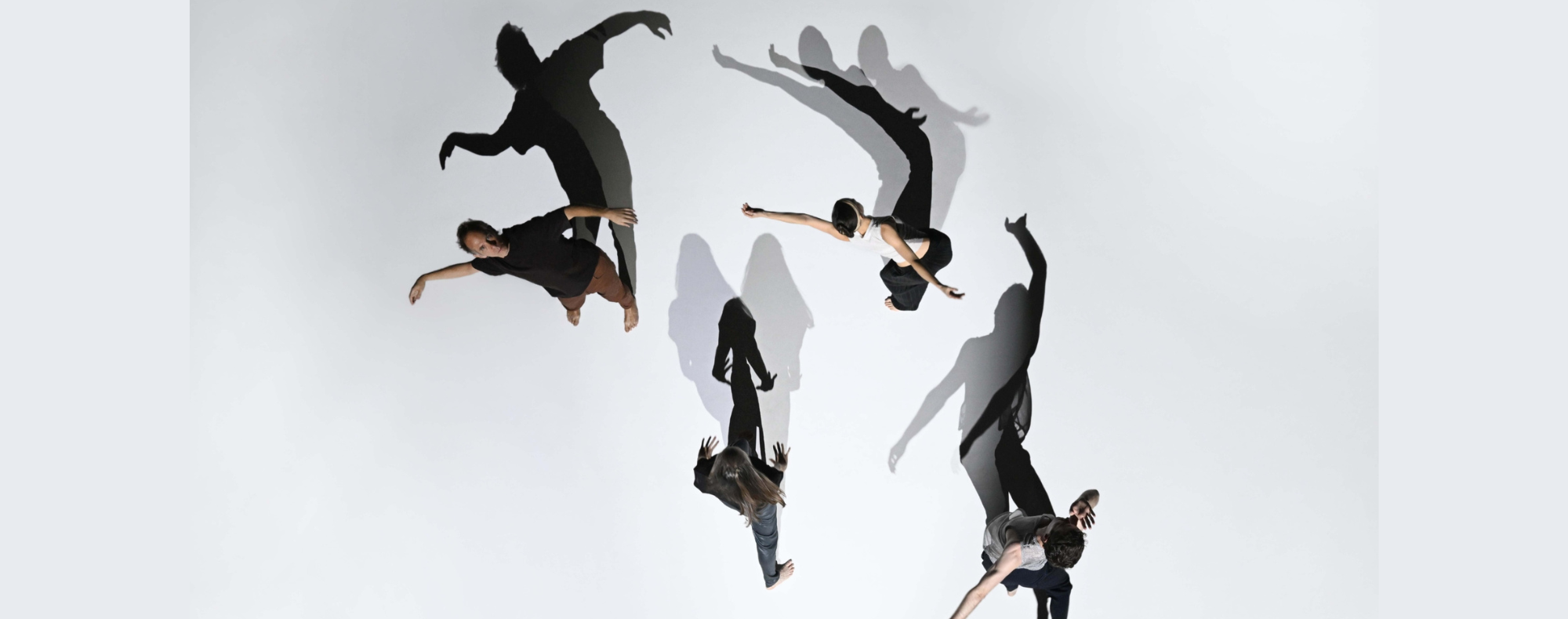
Now to MSTM which was an unexpected delight. Why? I don’t know. I expected nothing less than brilliance and I was not disappointed. MSTM is an acronym for the four performer/makers in Martin del Amo, Sue Healey, Tra Mi Dinh and Mitchell Christie.
To say I was excited about this grouping is an understatement. Again, I will have to preface that it is my positioning as a perpetual mid-career independent dancer and maker which influenced, or exacerbated my anticipatory enthusiasm.
For in MSTM not only were the more experienced artists in del Amo and Healey choreographing, but they were performing as well!
I am so sick of having to explain myself as a current dance practitioner who still manages to throw a leg over. So tired of seeing the look of near pity akin to throwing a dog a complimentary bone. Well, no left overs thrown in this production I can assure you now. Right from the get-go it was plain to see that there were no concessions made in regards to age or experience.
Spoiler alert. Upon being ushered in via the rear entrance, after walking up the garden path so to speak, we were treated to a gallery experience as multiple projections of the dancers filled every nook on the walls of the back studio. It was so crowded not every person was afforded full access to all of the images but this, I am almost sure, was part of the experience as we caught glimpses of the dancers through the bodies of other audience members who acted as dynamic frames. The largest moving image appeared as a newsreel on the studio’s longest wall which featured a series of slick edits of entrances and exits. I am certain this was the work of Healey who has dedicated much of her practice to dance on film.
Next we were manoeuvred into a tight space behind stage and, as the anticipation mounted, then ebbed, the curtains parted for us to view the seating bank as performers ourselves before making our way across the floor to take our rightful places before the show proper ensued.
Of course the performers acquitted themselves well, as expected. From Martin del Amo we were regaled with subtle contextual shifts indicative of his solo practice. Martin is a master storyteller and even in this full length abstract movement montage he was able to imbue each sequence with an ambience usually attributed to the narrative form. Del Amo’s quick side to side head shifts made him stand out in relief from the other dancers as the opening sequence was replicated incrementally faster in repeated succession; he appeared like a lost soul navigating an increasingly complicated labyrinth. When the ensemble’s arms were held aloft in fifth position, del Amo’s open palms appeared to let slip the presence of a quiet chaos brewing amidst the considered posturing from the others.
Of course those of us in the know knew exactly when Sue Healey made her mark. Not just because she was the soloist in the section of her own making, but because her choreography picked up where she left off in the back studio, expanding the potential of the two tiered back box to create small pockets of action. My mind made immediate connections to my current preoccupation with origami through her deft utilisation of the curtains. Like secrets unfolding, Healey’s exploratory whimsy permeated the space, changing the tone of the work yet again.
Both Tra Mi Dinh and Mitchell Christie are at the top of their physical game and took turns showering us with their physical prowess. I did miss the little extra something something from Mitchell in this production as normally my eye is drawn to him within ensembles. I also thought this would be the moment I would see some of the abandon that I am sure Tra Mi would have demonstrated to the Sydney Dance Company, however as a testament to Dinh’s versatility her solo within this work alternatively demonstrated a precision in isolations.
So there you have it, two concerted programs of intergenerational engagement. What can I say for diversity from major companies? It’s a good starting place as opposed to an obligatory box to tick.
Until the next one.
Vicki Van Hout
FORM Dance Projects
Blogger in Residence
*The views expressed in this article are those of the author and do not necessarily reflect the views of FORM Dance Projects or its affiliates.